
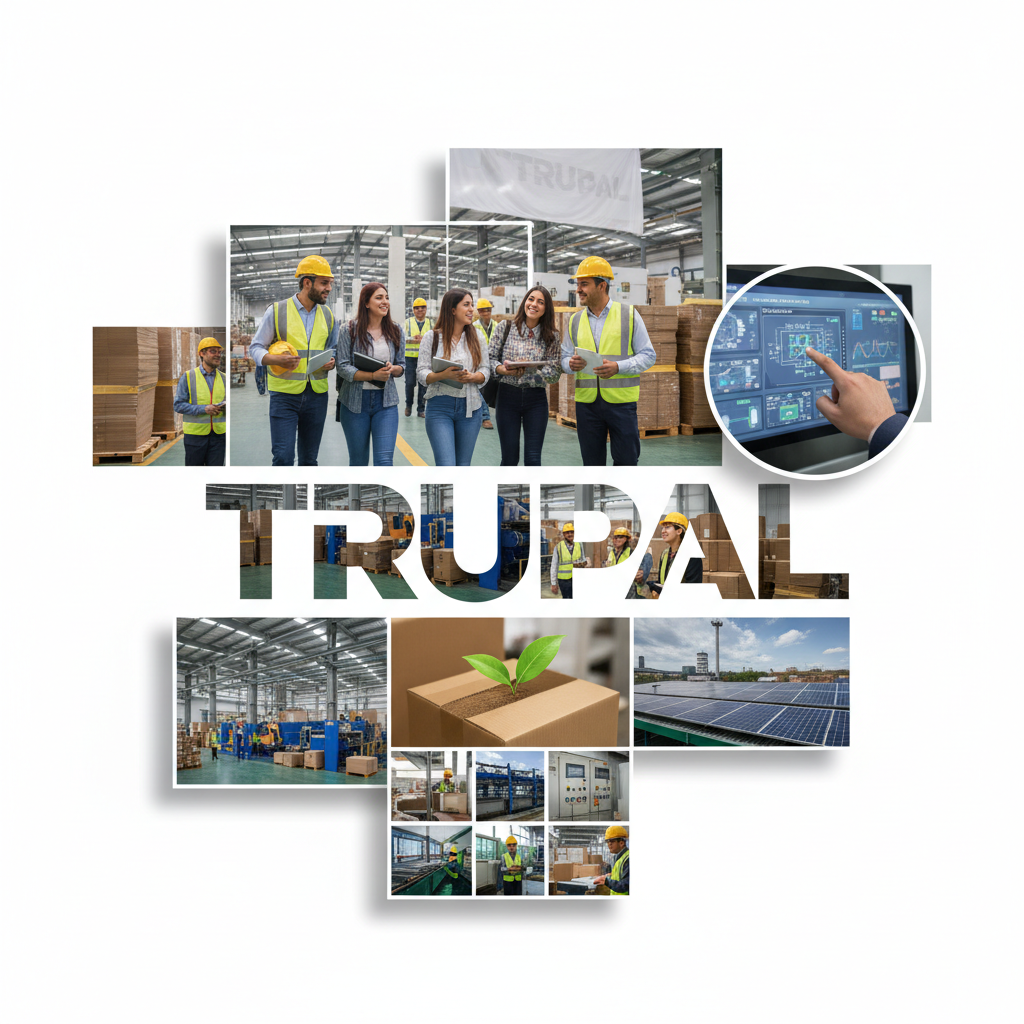
TRUPAL Welcomes Universidad del Pacífico Students to its Huachipa Plant to Promote Industrial Sustainability
Students from the Universidad del Pacífico visited TRUPAL's Huachipa plant, gaining a practical understanding of sustainable packaging operations, circular economy models, and significant paper industry trends for 2024-2025.
A Strategic Bridge Between Academia and the Paper Industry
Packaging and corrugated cardboard are no longer just simple containers; they have become key components of global logistics and sustainable development. In this context, the Peruvian company TRUPAL, a leading provider of sustainable packaging solutions, recently welcomed undergraduate students from the Universidad del Pacífico to its Box Plant located in Huachipa. This initiative has a clear objective: to bring future professionals closer to the reality of the manufacturing industry, teaching them firsthand about production processes and corporate sustainability strategies.
The visit to the facilities allowed students to directly observe the operations of one of the region's most important companies in the manufacturing of paper and corrugated cardboard. During the tour, the students not only learned about the machinery and logistics behind the creation of packaging but also discussed the contemporary challenges of the sector. The initiative is part of a broader commitment to complement academic education with practical experiences, fostering a professional profile with greater strategic vision and sensitivity to industrial impact on society.
For the global industry, highly trained human talent is essential. Universities play a fundamental role in shaping leaders who understand that profitability and environmental responsibility must go hand in hand. Direct observation of an industrial plant exposes students to the complexities of packaging design, quality control, energy efficiency, and supply chain management.
Circular Economy: The Core of Modern Production
During the visit, the main focus was the circular economy model consolidated by the industry. Unlike traditional linear models, today's landscape demands that the lifecycle of cardboard be continuous. The future professionals were able to analyze how recycled material enters the paper mills and is transformed back into high-strength boxes for critical sectors such as agro-exports and mass consumption.
Industry Trends and Impact in Packaging (2024-2025)
The global packaging market is undergoing a profound transformation driven by stricter environmental regulations and conscious consumers. Recent corporate data perfectly illustrate this transition and the future of the paper sector:
- Solid operational figures: During 2024, TRUPAL delivered around 200,000 tons of cardboard boxes. Of this volume, an average of 60% was produced from recycled paper, a standard that the global industry seeks to rapidly replicate.
- Saving natural resources: The use of recycled cardboard on an industrial scale has generated a massive environmental impact. Through these practices, it is estimated that the consumption of more than 280 million liters of water, 40 million kWh of energy, and 15 million liters of fuel was avoided. Furthermore, over 1.5 million trees were preserved.
- Alliances and traceability for 2025: One of the main trends in the sector is the professionalization of the collection base. For 2025 and 2026, paper companies plan to implement formal training programs for hundreds of collectors and consolidate a census of the local recycling market to ensure material traceability from the source.
Technology and Regulatory Compliance (ESG)
Another fundamental aspect addressed was compliance with Environmental, Social, and Governance (ESG) standards. The students learned that, currently, companies must use digital tools to anticipate environmental regulations and minimize operational and legal risks. TRUPAL uses these technologies to ensure that its operation is aligned with the demands of the international market, where certifications are indispensable for exporting.
Global Sector Perspectives
The analyzed experience resonates strongly with the global challenges of the paper industry. The worldwide demand for sustainable packaging continues to grow exponentially, largely driven by the boom in e-commerce and the urgent need to replace single-use plastics. However, waste management remains a complex operational challenge requiring immediate attention.
Given this, the education of the next generation of engineers, administrators, and economists is vital. By opening its doors, the industrial sector not only showcases its operational achievements but also transfers invaluable knowledge on how to operate profitably under a strict sustainable model. The visit by the Universidad del Pacífico students to the Huachipa plant is a clear demonstration that the future of the industry depends on continuous collaboration between the private sector and the educational ecosystem, forging professionals capable of leading the next responsible and green industrial revolution.
Enjoying this article?
Register free to save and share.